Rajiv Gandhi University Of Health Sciences Complete Student Guide
Healthcare education plays a vital role in preparing future doctors, dentists, pharmacists, nurses, and allied health professionals. Among India’s leading health sciences universities, rajiv gandhi university of health sciences has established itself as a major institution dedicated to medical education, research, and professional development. The university oversees numerous affiliated colleges while supporting academic excellence across a wide range of healthcare disciplines.
Whether students are exploring undergraduate programs, postgraduate education, research opportunities, or examination processes, understanding the structure and services of rajiv gandhi university of health sciences helps them make informed academic decisions.
Rajiv Gandhi University Of Health Sciences Quick Overview
| Category | Details |
|---|---|
| University | Rajiv Gandhi University of Health Sciences |
| Established | 1996 |
| Location | Bengaluru, Karnataka, India |
| Type | Public state university |
| Focus | Health sciences education |
| Academic Areas | Medical, dental, nursing, pharmacy, allied health sciences |
What Is Rajiv Gandhi University Of Health Sciences
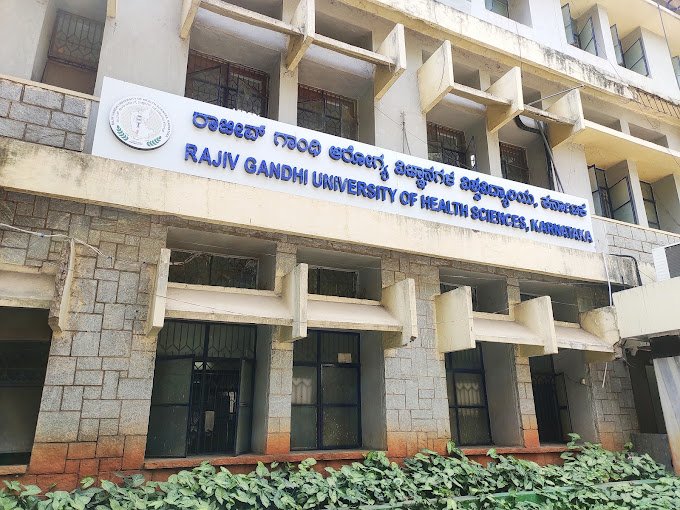
rajiv gandhi university of health sciences (RGUHS) is a public health sciences university headquartered in Bengaluru, Karnataka. It was established by the Government of Karnataka to regulate, coordinate, and improve health sciences education throughout the state.
The university serves as the academic authority for numerous affiliated colleges offering professional healthcare education.
Its mission focuses on:
- High-quality education
- Medical research
- Professional ethics
- Clinical excellence
- Academic innovation
Over the years, the university has become one of India’s largest health sciences institutions.
History Of The University
The establishment of rajiv gandhi university of health sciences marked an important step toward creating a centralized system for health sciences education in Karnataka.
Before its creation, different universities supervised various medical institutions. Establishing a dedicated health sciences university helped standardize:
- Academic regulations
- Examination systems
- Curriculum development
- Affiliation processes
- Educational quality
This unified approach strengthened healthcare education across the state.
Academic Programs
One of the major strengths of rajiv gandhi university of health sciences is the wide variety of academic programs offered through its affiliated institutions.
Major fields include:
Medical Education
Programs in modern medicine prepare students for clinical practice, diagnosis, treatment, and patient care.
Dental Education
Dental programs focus on oral healthcare, dental surgery, preventive dentistry, and specialized treatments.
Nursing Education
Nursing programs prepare healthcare professionals for patient care, hospital services, and community health.
Pharmacy
Pharmacy education includes pharmaceutical sciences, drug development, clinical pharmacy, and medication management.
Allied Health Sciences
Students can also pursue programs related to laboratory sciences, imaging technology, physiotherapy, and other healthcare specialties.
Affiliated Colleges
A significant responsibility of rajiv gandhi university of health sciences is supervising affiliated educational institutions.
These colleges operate across Karnataka and provide healthcare education under the university’s academic framework.
Affiliated institutions may include:
- Medical colleges
- Dental colleges
- Nursing colleges
- Pharmacy colleges
- Physiotherapy colleges
- Allied health sciences institutions
The university supports academic consistency across these institutions.
Admission Overview
Admissions to programs affiliated with rajiv gandhi university of health sciences generally depend on applicable eligibility requirements established by regulatory authorities and participating institutions.
Admission processes often consider:
- Entrance examinations
- Academic qualifications
- Counseling procedures
- Government regulations
- Seat availability
Students should always refer to official university and college notifications for current admission information.
Examination System
The university conducts examinations that assess academic knowledge and professional competence across multiple healthcare disciplines.
The examination process typically includes:
- Theory examinations
- Practical assessments
- Clinical evaluations
- Internal assessments
- University examinations
A structured examination system helps maintain academic standards for healthcare education.
Research And Academic Development
Research plays an important role within rajiv gandhi university of health sciences.
Healthcare research contributes to:
- Medical innovation
- Improved patient care
- Clinical advancements
- Public health knowledge
- Evidence-based practice
Students and faculty members participate in research activities that support continuous improvements in healthcare education.
Student Learning Environment
Healthcare education requires both classroom instruction and practical experience.
Students benefit from:
- Laboratory training
- Clinical practice
- Hospital exposure
- Simulation learning
- Faculty guidance
- Professional skill development
This combination helps prepare graduates for real-world healthcare responsibilities.
Importance Of Health Sciences Education
Healthcare professionals have an important role in society.
Health sciences education helps prepare future professionals to:
- Diagnose illnesses
- Deliver patient care
- Promote community health
- Support medical research
- Improve healthcare systems
Institutions like rajiv gandhi university of health sciences contribute significantly to developing skilled healthcare professionals who serve communities across India and beyond.
Why Students Choose Rajiv Gandhi University Of Health Sciences
Students are attracted to rajiv gandhi university of health sciences because of its extensive academic network, healthcare-focused education, standardized curriculum, and strong affiliation system.
Its emphasis on professional education, clinical experience, and research makes it an important institution within India’s medical education landscape.
Student Support Services
A successful healthcare education system extends beyond classroom teaching. rajiv gandhi university of health sciences supports students through academic systems that help them progress throughout their professional education.
Student-related services commonly include:
- Examination management
- Academic notifications
- Result publication
- Degree-related processes
- Research guidance
- Digital academic resources
These services help students remain informed throughout their educational journey.
Digital Learning And Technology
Technology has become an essential part of higher education, including health sciences.
Digital resources help improve learning through:
- Online academic information
- Electronic learning materials
- Digital examination updates
- Research databases
- Student communication platforms
The continued adoption of digital tools supports more efficient academic administration and learning.
Importance Of Clinical Training
Healthcare professionals require practical experience alongside theoretical education.
Clinical training allows students to:
- Develop patient-care skills
- Apply classroom knowledge
- Improve communication
- Learn professional ethics
- Gain supervised practical experience
Clinical exposure remains one of the most important aspects of medical, dental, nursing, pharmacy, and allied health education.
Career Opportunities After Graduation
Graduates from colleges affiliated with rajiv gandhi university of health sciences may pursue careers across numerous healthcare sectors depending on their qualifications.
Possible career paths include:
- Hospitals
- Private healthcare organizations
- Government healthcare services
- Medical research institutions
- Public health organizations
- Academic teaching
- Pharmaceutical companies
- Clinical laboratories
Some graduates also continue with postgraduate education and specialized professional training.
Research And Innovation
Healthcare continues to evolve through scientific research and innovation.
Research activities help improve:
- Disease prevention
- Clinical treatments
- Patient outcomes
- Medical technology
- Public health strategies
Universities that encourage research contribute to the advancement of healthcare knowledge and professional practice.
Why Health Sciences Universities Matter
Institutions dedicated to health sciences play an important role in strengthening healthcare systems.
They help:
- Educate future professionals
- Promote ethical medical practice
- Support scientific research
- Standardize professional education
- Improve healthcare quality
By maintaining academic standards and encouraging continuous learning, universities contribute to better healthcare services for society.
Explore More Education Insights With TheMarginist
Looking for more educational information beyond rajiv gandhi university of health sciences? TheMarginist publishes informative articles covering universities, higher education, professional courses, career guidance, business, technology, and current educational developments. Explore more resources related to rajiv gandhi university of health sciences to discover practical academic information, student guidance, and insights into healthcare education.
TheMarginist is committed to delivering reliable, engaging, and easy-to-understand content that helps students and readers stay informed about educational opportunities and career development.
Final Thoughts
rajiv gandhi university of health sciences has become one of India’s leading health sciences universities through its commitment to academic excellence, healthcare education, research, and professional development. By overseeing a large network of affiliated colleges and supporting high standards in medical, dental, nursing, pharmacy, and allied health education, the university plays an important role in preparing future healthcare professionals.
Students considering healthcare careers can benefit from understanding the university’s academic structure, affiliated institutions, examination processes, and educational opportunities while always referring to official university sources for the latest admissions and academic information.
Frequently Asked Questions
What is Rajiv Gandhi University of Health Sciences?
Rajiv Gandhi University of Health Sciences is a public health sciences university based in Bengaluru, Karnataka, that oversees health sciences education through affiliated colleges.
When was Rajiv Gandhi University of Health Sciences established?
The university was established in 1996 by the Government of Karnataka.
What courses are offered through Rajiv Gandhi University of Health Sciences?
Its affiliated institutions offer programs in medicine, dentistry, nursing, pharmacy, physiotherapy, and various allied health sciences.
Where is Rajiv Gandhi University of Health Sciences located?
The university is headquartered in Bengaluru, Karnataka, India.
Does Rajiv Gandhi University of Health Sciences conduct examinations?
Yes. The university conducts examinations, publishes academic results, and oversees assessment processes for its affiliated institutions.
Are many colleges affiliated with Rajiv Gandhi University of Health Sciences?
Yes. The university supervises numerous medical, dental, nursing, pharmacy, and allied health sciences colleges across Karnataka.
Why is Rajiv Gandhi University of Health Sciences important?
The university plays a significant role in maintaining academic standards, supporting healthcare education, promoting research, and preparing qualified healthcare professionals.