Calisthenics Ab Workout: A Bodyweight Routine for a Stronger Core
Building a strong core does not require a gym full of machines or expensive equipment. A well-designed calisthenics ab workout can use your own body weight to challenge the abdominal muscles, improve stability, and strengthen the muscles that support everyday movement. Exercises such as planks, mountain climbers, leg raises, dead bugs, and hollow-body holds can be combined into an effective routine for beginners and experienced athletes alike.
What Is Calisthenics?
Calisthenics is a form of exercise that primarily uses body weight as resistance. Instead of relying on machines or heavy external weights, calisthenics movements use your body position, leverage, and controlled movement to create resistance.
Common calisthenics exercises include:
- Push-ups
- Pull-ups
- Dips
- Squats
- Lunges
- Planks
- Leg raises
- Mountain climbers
- Hollow-body holds
For abdominal training, this approach can be particularly convenient because many core exercises require little or no equipment.
Why Train Your Core With Bodyweight Exercises?
The abdominal muscles are only one part of the core. Your core also includes muscles around the hips, pelvis, back, and trunk that help stabilize your body during movement.
A strong core can help with:
- Better body control
- Improved posture
- Balance and stability
- Athletic performance
- Efficient movement
- Supporting the spine during exercise
- Better control during compound movements
The American Council on Exercise includes exercises such as bird dogs, planks, crunches, and other bodyweight movements in its exercise library for abdominal training.
8 Effective Bodyweight Core Exercises
The following exercises can be combined into a simple home routine. Start with easier variations and gradually increase difficulty as your strength improves.
| Exercise | Primary Focus | Beginner Starting Point |
|---|---|---|
| Forearm plank | Core stability | 15–30 seconds |
| Dead bug | Deep core control | 6–10 each side |
| Bird dog | Core and balance | 6–10 each side |
| Reverse crunch | Lower abdominal region | 8–12 reps |
| Mountain climber | Core and conditioning | 10–20 each side |
| Side plank | Obliques and stability | 10–20 seconds each side |
| Hollow-body hold | Full abdominal tension | 10–20 seconds |
| Lying leg raise | Abdominals and hip flexors | 6–12 reps |
The number of repetitions is only a starting point. Good technique should take priority over completing a large number of repetitions.
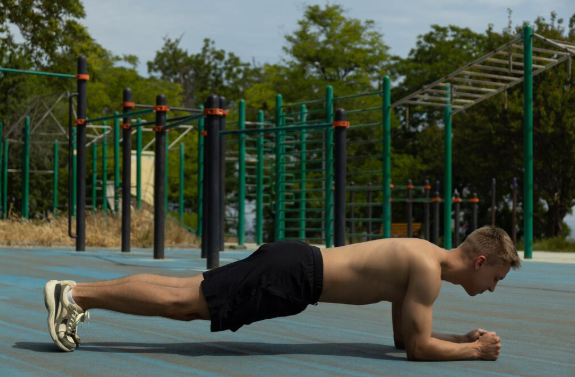
1. Forearm Plank
The forearm plank is one of the simplest ways to practice whole-core stabilization.
How to Do It
- Begin on your forearms and knees.
- Extend your legs behind you when ready.
- Keep your elbows underneath or close to your shoulders.
- Brace your abdomen.
- Keep your body in a relatively straight line.
- Breathe steadily while maintaining the position.
Start with 15–30 seconds rather than immediately attempting a long hold.
Beginner Modification
Keep your knees on the floor while maintaining a straight line from your knees through your shoulders.
As your core becomes stronger, progress to a full plank.
2. Dead Bug
The dead bug is useful for practicing abdominal control while moving the arms and legs.
How to Do It
Lie on your back with your knees bent and raised.
Extend one leg while moving the opposite arm toward the floor. Return to the starting position and alternate sides.
Keep your movements slow and controlled.
Why It Works
The exercise challenges your ability to stabilize the trunk while your limbs move. This makes it useful for developing coordination and core control rather than simply trying to perform as many repetitions as possible.
3. Bird Dog
The bird dog combines core stability, balance, and controlled movement.
How to Do It
Start on your hands and knees.
Extend your right arm forward while extending your left leg backward. Hold briefly, return to the starting position, and switch sides.
Try to keep your hips relatively level throughout the movement.
Common Mistake
Avoid lifting your leg so high that your lower back arches excessively. The goal is controlled stability rather than maximum range of motion.
ACE lists the bird dog as a bodyweight exercise that targets the abs, back, and hips.
4. Reverse Crunch
The reverse crunch emphasizes the abdominal muscles through controlled movement of the pelvis and legs.
How to Do It
- Lie on your back with your knees bent.
- Position your arms comfortably beside you.
- Brace your abdominal muscles.
- Bring your knees toward your chest.
- Gently curl your pelvis upward.
- Lower yourself slowly.
Avoid swinging your legs.
The American Council on Exercise includes reverse crunch variations among its abdominal exercise options.
5. Mountain Climbers
Mountain climbers add a more dynamic element to core training.
How to Do It
Begin in a high-plank position.
Bring one knee toward your chest, return it, and then bring the opposite knee forward.
Continue alternating.
Beginners can perform the movement slowly. More experienced exercisers can increase the pace while maintaining control.
What Makes Them Useful?
Mountain climbers challenge the abdominal muscles while also requiring the shoulders, hips, and legs to stabilize the body.
Because they are dynamic, they can also raise your heart rate.
6. Side Plank
The side plank emphasizes the muscles along the sides of your trunk while challenging overall stability.
How to Do It
Lie on your side and position your elbow underneath your shoulder.
Lift your hips from the floor while keeping your body aligned.
Hold the position for a comfortable amount of time.
Switch sides.
Easier Variation
Keep your bottom knee on the floor for additional support.
As you become stronger, straighten both legs.
7. Hollow-Body Hold
The hollow-body position is a challenging calisthenics movement that requires significant abdominal control.
How to Do It
Lie on your back.
Press your lower back gently toward the floor while lifting your shoulders and legs slightly.
Extend your arms overhead if you can maintain good form.
Hold the position while breathing normally.
Beginner Modification
Bend your knees and keep your arms closer to your body.
The correct progression is more important than trying to achieve the most difficult position immediately.
8. Lying Leg Raises
Lying leg raises can provide a demanding challenge for the abdominal region and hip flexors.
How to Do It
Lie flat on your back.
Keep your legs together and slowly raise them to a comfortable height.
Lower them under control without allowing your lower back to excessively arch.
Make It Easier
Bend your knees slightly or limit the range of motion.
If you cannot maintain control, use an easier variation rather than forcing the movement.
A Beginner Routine
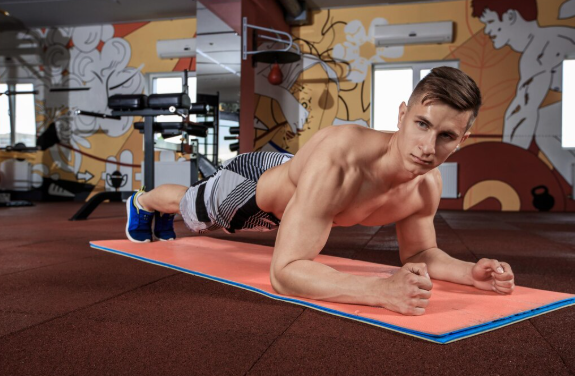
If you are new to bodyweight core training, start with a short session.
Beginner Circuit
Perform:
- Dead bug — 8 reps per side
- Bird dog — 8 reps per side
- Forearm plank — 20 seconds
- Reverse crunch — 8 reps
- Side plank — 15 seconds per side
Rest for approximately 30–60 seconds and repeat the circuit once more if your technique remains strong.
The objective is not to exhaust your abs. It is to develop controlled strength and endurance.
Intermediate Routine
Once the beginner routine becomes comfortable, increase the challenge.
Intermediate Circuit
Perform:
- Forearm plank — 30–45 seconds
- Reverse crunch — 12 reps
- Mountain climbers — 20 reps per side
- Side plank — 25–30 seconds per side
- Hollow-body hold — 20 seconds
- Bird dog — 10 reps per side
Complete two or three rounds depending on your fitness level.
Rest between rounds as needed.
Advanced Bodyweight Core Routine
More experienced athletes can use harder variations rather than simply performing hundreds of repetitions.
Try:
- Long-lever planks
- Hollow-body rocks
- Hanging knee raises
- Hanging leg raises
- Advanced side-plank variations
- Slow mountain climbers
- L-sit progressions
- Dragon-flag progressions
Advanced exercises require significantly more strength and body control.
Do not progress to a difficult movement simply because it looks impressive. Master the fundamentals first.
How Often Should You Train Your Abs?
Your abdominal muscles need recovery just like other muscles.
For most people, direct core training two to three times per week is enough to make progress, especially when the routine is challenging.
You can also train your core indirectly during full-body calisthenics exercises such as:
- Push-ups
- Pull-ups
- Squats
- Lunges
- Dips
- Handstand work
ACE recommends allowing recovery between dedicated abdominal sessions rather than treating the abs as a muscle group that must be trained intensely every day.
How to Progress Without Weights
One of the advantages of calisthenics is that you can make many exercises harder without adding equipment.
Increase Time
For static exercises such as planks, gradually increase your hold time while maintaining good technique.
Increase Repetitions
For dynamic movements, add repetitions gradually rather than making large jumps.
Change Leverage
A longer lever can make an exercise substantially harder. For example, extending your legs during a hollow-body position increases the challenge.
Slow Down
Performing a movement more slowly can increase muscular control and time under tension.
Use More Difficult Variations
Once you can perform an exercise comfortably, move to a more advanced variation.
This progression is generally more useful than simply trying to perform extremely high repetition counts.
Why Form Matters
Core exercises are often performed too quickly.
Rushing can reduce muscular control and cause other muscles to compensate.
For example, during a crunch, the goal should be controlled movement rather than aggressively pulling the head forward. ACE’s exercise instructions emphasize controlled movement and proper spinal positioning during crunches.
During planks, focus on maintaining your position rather than holding the exercise for a predetermined time after your form has broken down.
Good form should determine when a set ends.
Common Mistakes to Avoid
Doing Hundreds of Repetitions
More repetitions do not automatically produce better results. Quality and progressive overload matter more than simply chasing a high number.
Training Abs Every Day
Your core muscles need recovery. Hard sessions performed too frequently can interfere with recovery and performance.
Ignoring the Rest of the Body
A strong midsection is useful, but balanced training should include the legs, back, chest, shoulders, and arms.
Using Momentum
Swinging your legs or rapidly moving through repetitions can reduce control.
Progressing Too Quickly
Advanced exercises such as difficult leg raises or complex hollow-body movements require a strong foundation.
ACE emphasizes building stability and coordination before progressing to more demanding core exercises.
Can Bodyweight Training Give You Visible Abs?
Bodyweight exercises can strengthen and develop the abdominal muscles, but visible abs depend on more than ab training.
Body-fat levels, genetics, nutrition, muscle development, and overall activity all influence how visible the abdominal muscles are.
Doing more crunches does not specifically remove fat from the stomach.
A better approach is to combine:
- Progressive strength training
- Regular physical activity
- Adequate protein
- A balanced diet
- Appropriate calorie intake
- Consistent sleep and recovery
Core exercises should be viewed as a way to build strength and function rather than as a method for spot-reducing abdominal fat.
How to Warm Up
A short warm-up can prepare you for training.
Try five minutes of light movement followed by:
- Arm circles
- Gentle trunk rotations
- Cat-cow movements
- Hip circles
- Easy marching
- Controlled bodyweight squats
The warm-up should increase movement gradually rather than exhaust you before the workout begins.
Safety Tips for Core Training
Exercise should be challenging without causing significant pain.
Keep these points in mind:
- Start with an appropriate difficulty level.
- Use controlled movements.
- Keep breathing throughout the exercise.
- Stop if you experience sharp or unusual pain.
- Do not sacrifice form to complete more repetitions.
- Give your muscles time to recover.
- Progress gradually.
- Modify exercises if you have existing injuries or limitations.
If you have persistent back pain or another medical condition, consider getting individualized guidance from a qualified healthcare professional before beginning a demanding routine. ACE specifically notes that some twisting and leg-lifting exercises may not be appropriate for people with lower-back pain.
Key Points to Remember
- Calisthenics can strengthen the core without requiring weights or machines.
- Start with foundational exercises such as planks, dead bugs, and bird dogs.
- Progress gradually toward more challenging movements.
- Quality of movement is more important than high repetition counts.
- Train the core alongside the rest of the body.
- Give your abdominal muscles adequate recovery time.
- Use easier variations when necessary.
- Do not confuse abdominal strength with abdominal fat loss.
- Nutrition and overall activity influence visible muscle definition.
- Consistency is more important than performing an extremely difficult workout occasionally.
Final Thoughts
A bodyweight core routine can be an effective and convenient way to build abdominal strength, stability, and control. You do not need complicated equipment to challenge your midsection. Exercises such as planks, dead bugs, bird dogs, reverse crunches, side planks, and hollow-body holds provide different types of challenges and can be progressed over time.
Start with movements you can perform with good technique, then gradually increase repetitions, hold times, or exercise difficulty. Combine core training with full-body calisthenics, nutritious food, regular activity, and adequate recovery for a balanced approach to fitness.
Frequently Asked Questions
1. Can beginners do calisthenics core exercises?
Yes. Beginners can start with easier variations such as knee planks, dead bugs, bird dogs, and modified side planks. Difficulty can be increased gradually as strength and coordination improve.
2. How many days a week should I train my abs?
For many people, two to three dedicated core sessions per week are sufficient. Allow recovery between challenging sessions and remember that many full-body exercises also engage the core.
3. Can bodyweight exercises build strong abs?
Yes. Bodyweight movements can provide substantial resistance when exercises are appropriately selected and progressively made more difficult. Advanced calisthenics movements can be particularly demanding.
4. Are planks better than crunches?
Neither is universally better. Planks emphasize stabilization, while crunches involve controlled trunk flexion. A well-rounded routine can include different movement patterns depending on your goals and physical limitations.
5. Will an ab workout remove belly fat?
An abdominal workout can strengthen the muscles underneath the fat, but it cannot specifically remove fat from one area. Reducing overall body fat generally requires appropriate nutrition, physical activity, and a sustainable calorie deficit.